PrEP medications can help make an impact on the HIV epidemic
PrEP usage was associated with a reduction in new HIV diagnoses1
Estimated decade percentage change in HIV diagnoses rates by state quintile of PrEP usage, 2012 to 2022, United States1*†
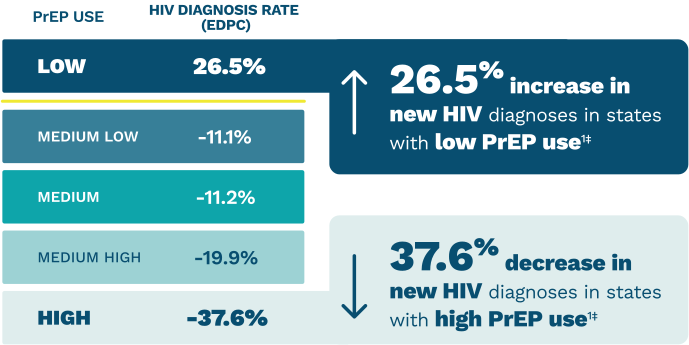
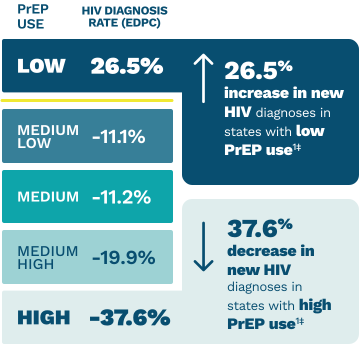
In this analysis of real-world data from 2012 to 2022, states with the highest PrEP uptake had the greatest reduction in HIV diagnoses, after accounting for state viral suppression.1
*An ecological analysis of US state-level data was conducted on PrEP use, HIV viral suppression, and trends in HIV diagnoses in all US states and the District of Columbia using a commercial pharmacy database to calculate PrEP coverage (PrEP users per 100 people with a PrEP indication) and public health surveillance data to document HIV diagnoses from January 1, 2012 to December 31, 2022 by state and year. States were assigned to quintiles of mean PrEP coverage over the 10-year period. Quintile-specific changes in HIV diagnoses from 2012 to 2022 were calculated. Generalized linear mixed modeling was used to assess the state-level associations of PrEP coverage with HIV diagnosis rates, controlling for state‑specific viral suppression.
†From 2012 to 2022, the District of Columbia had a 68.2% decrease in EDPC in HIV diagnosis rates and a mean PrEP coverage of 24%, which are not included in the above table.
‡Data shown for quintiles are trends and do not represent EDPC for each individual state.
Decrease in HIV acquisition linked to timely initiation of PrEP

According to a real-world study analyzing PrEP prescriptions between 2019 and 20232§:
- Timely initiation of PrEP was linked to a decrease in HIV acquisition
- Any delay in initiating PrEP¶ was associated with a higher chance of acquiring HIV
Help individuals promptly start PrEP, and encourage discussion about HIV prevention
(Tao, 2023)
§522,273 prescriptions of PrEP for CAB, F/TDF, or F/TAF were analyzed between January 2019 and February 2023, selected from IQVIA® LAAD.2
¶Study compared delays of PrEP dispensation from day 0, when PrEP was dispensed.2
View your local PrEP data
See estimates of how many people in your area are prescribed PrEP vs how many are currently indicated for it.
County-level data are available for some territories, but not all. Where county-level data are unavailable, state-level data are shown.


Search by county or state:
**State and county numbers have been rounded down to the nearest 100.
††State and county PrEP prescriptions include FTC/TDF, DESCOVY FOR PrEP®, and CAB-LA.3
CAB=cabotegravir; CAB-LA=long-acting cabotegravir; CDC=Centers for Disease Control and Prevention; EDPC=estimated decade percentage change; F/TAF=tenofovir alafenamide; F/TDF=tenofovir disoproxil fumarate; FTC/TDF=emtricitabine/tenofovir disoproxil fumarate; IQVIA LAAD=IMS Health, Quintiles, and VIA Longitudinal Access and Adjudication Data.